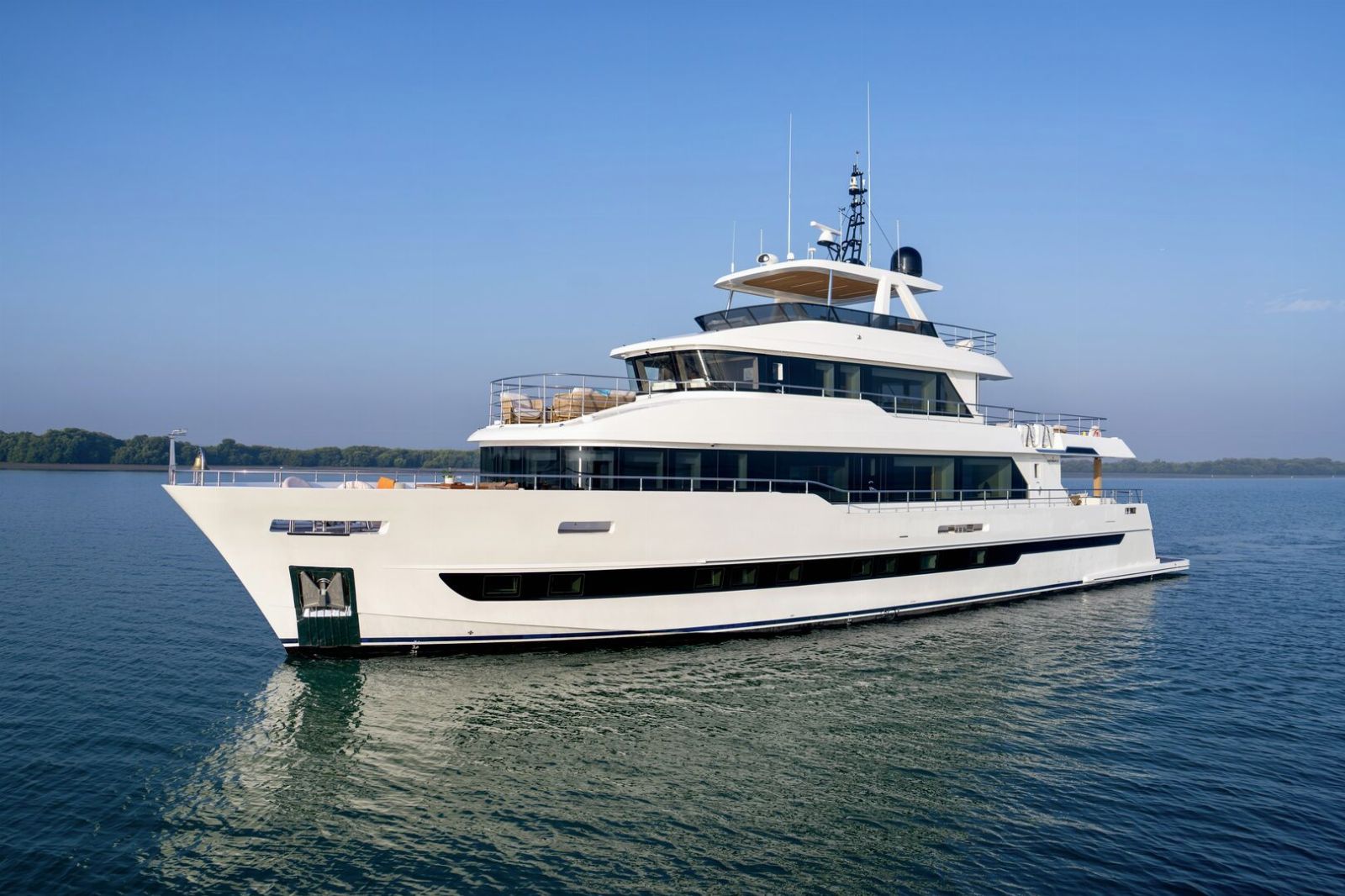

For decades, Europe has set the benchmark for major superyacht refits, supported by an established ecosystem of naval architects, engineers, designers, specialist contractors and suppliers.
Across the Atlantic, South Florida has substantial marine infrastructure, established shipyards and a growing network of specialists. For Miami-based designer Carla Guilhem, the opportunity lies not in replicating Europe's model, but in connecting the expertise already available in the United States.
“A refit is not a yard that opens and closes: it is an ecosystem that has to move with the yacht.”
“The US has exceptional marine infrastructure and some very capable refit facilities, particularly in South Florida,” says Guilhem. “What has historically been less developed is the ecosystem surrounding the yard.”
For yachts operating in Florida, the Bahamas and the Caribbean, this raises a question: rather than crossing the Atlantic to access an established refit ecosystem, could that expertise instead be brought to the yacht?
Beyond the interior
For Guilhem, a fundamental consideration in any substantial refit is recognising how quickly an aesthetic decision can become a technical one. Moving a staircase, enlarging glazing or reconfiguring an exterior deck can affect structure, weight, stability and classification requirements.
“The moment you start making meaningful changes to a yacht, the conversation becomes much bigger than interiors,” she explains. “The designer needs to understand where design ends and naval architecture or engineering begins.”
Her approach centres on assembling multidisciplinary teams around each yacht's requirements, bringing together shipyards, naval architects, engineers, designers and specialist fabricators.
“A yacht is an incredibly sophisticated machine,” she says. “As designers, we need to understand the boundaries of our discipline and know when the naval architect, engineer or another specialist needs to become part of the conversation.”
The objective is to protect the design vision while ensuring every decision considers the yacht as a whole. “Everyone needs to understand how their decisions affect the complete yacht, not only their individual scope.”

Designing around the owner
Guilhem's experience across high-end residential design and superyachts has shaped an approach that begins with how owners use their spaces rather than a particular aesthetic.
“Residential design taught me to begin with how somebody actually lives, rather than with an object or a style,” she says. “I bring the same thinking onboard.”
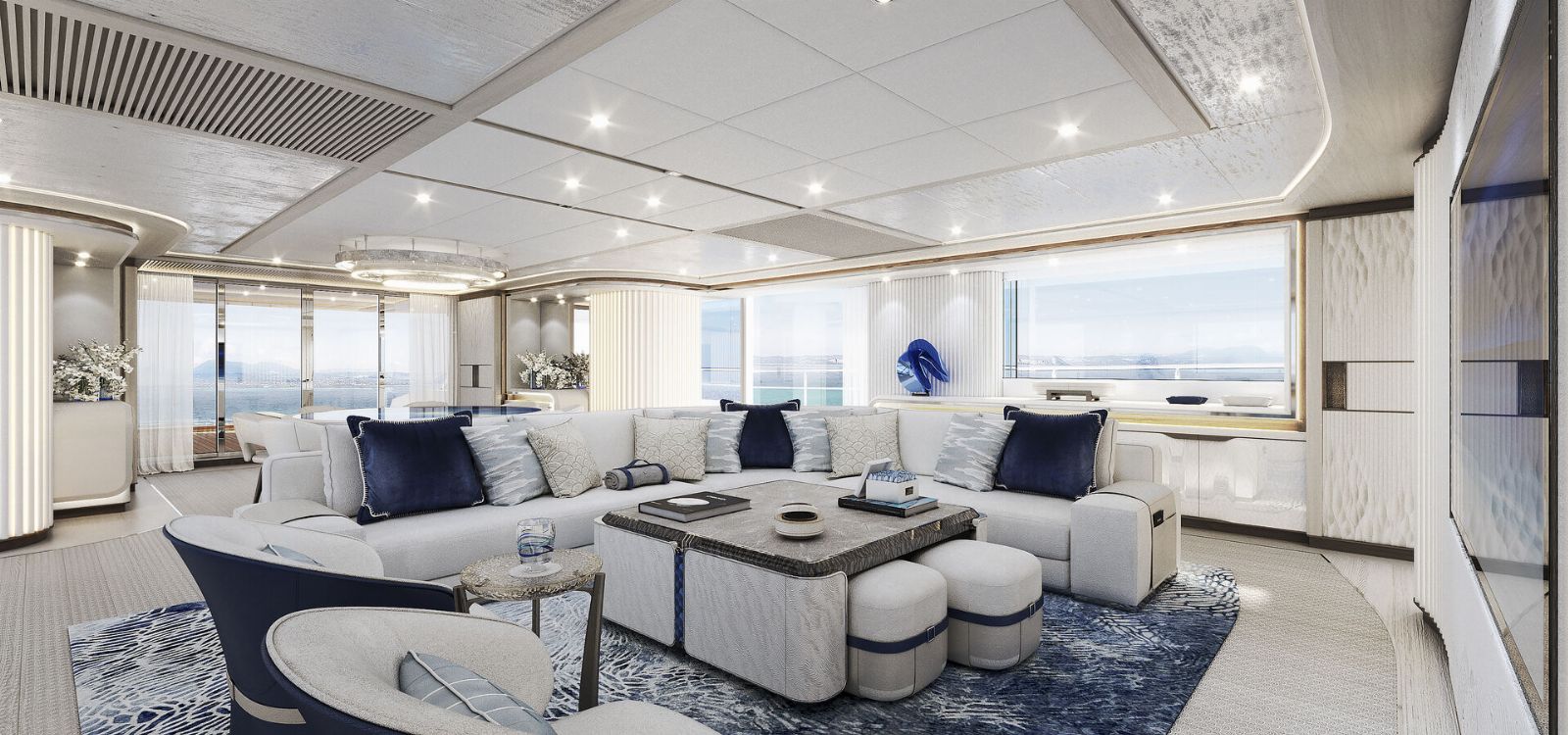
As owners spend longer periods at sea, expectations increasingly reflect the comforts of their residences ashore. Wellness facilities, natural light and stronger connections between interior and exterior spaces are influencing contemporary refits.
“The question is no longer only, ‘How do we make this yacht look more contemporary?’” says Guilhem. “It is, ‘How would this owner want to live onboard today?’”
However, transformation does not necessarily mean replacing everything. Guilhem considers a yacht's existing proportions, circulation and architectural qualities before introducing new elements.
“A refit should not be about replacing everything simply because it is old,” she says. “Sometimes the strongest decision is preserving an original element and allowing the new design to grow around it.”
For Guilhem, the most successful transformations achieve a seamless relationship between old and new. “The best refits are the ones where you don’t immediately understand where the old yacht ends and the new design begins.”

Bringing the ecosystem to the yacht
South Florida's geographical position offers advantages for yachts cruising the Americas. Avoiding a transatlantic repositioning can reduce time, fuel consumption, logistical demands and disruption to operational schedules.
Yet Guilhem believes location alone is insufficient. “The question should never be simply, ‘Can we do this in Florida?’” she says. “The question is whether we can assemble the right people, control the design and technical information properly and deliver the quality expected at superyacht level.”
Rather than competing directly with Europe's established refit centres, South Florida could offer a credible alternative for projects suited to its facilities and specialist capabilities.
“That made me question whether the yacht always needs to travel to the expertise, or whether we could assemble the expertise around the yacht,” she explains. “The infrastructure here is substantial. The opportunity is in connecting design and technical disciplines more effectively.”

A stronger alternative for the Americas
With established shipyards, marinas and access to the Bahamas and Caribbean cruising grounds, South Florida has many of the foundations needed to strengthen its position in the international refit market.
For Guilhem, the next step is coordinating these resources to deliver the quality and technical sophistication expected of a major superyacht refit, while recognising Europe's continued importance. “Europe has extraordinary shipyards and an extraordinary concentration of knowledge, and that should be respected.”
Ultimately, she envisages a more flexible international refit landscape, offering owners greater choice without compromising standards. “Europe will remain extremely important, but for the right project there can be another model,” Guilhem concludes. “The yacht doesn’t necessarily need to travel to the ecosystem.”
Perhaps, instead, the ecosystem can come to the yacht.
 Luca Sarti