
The American refit sector has plenty of work. What it lacks is people to do it. That was the message from the RefitX panel at the Fort Lauderdale International Boat Show (FLIBS) 2026, where yard executives named workforce training as the top challenge for the next decade.
Joel Shine, chief commercial officer of Derecktor Shipyards, asked industry and government for ambitious solutions. He pointed out a paradox: a mobile workforce is an advantage for the US, but it makes yards reluctant to invest in training someone who may leave for a competitor a month later.
The numbers back him up. A McKinsey study published in January 2026 estimated that US naval and commercial yards will need between 200,000 and 250,000 extra skilled tradespeople over the next ten years, of whom 158,000 to 198,000 in the private sector.
Big yachts still go to Europe
The US is the world’s largest refit market, but its share falls with size. In 2025 American yards took about 24 percent of refit visits by yachts over 30 metres, and only around 13 percent of those over 60 metres. Winning more large and European-built yachts is the next goal, and it depends on having the right skills.
The topic will return in 2027, when the Marine Industries Association of South Florida launches RefitX as a two-day refit event and forum during FLIBS.
Training in-house
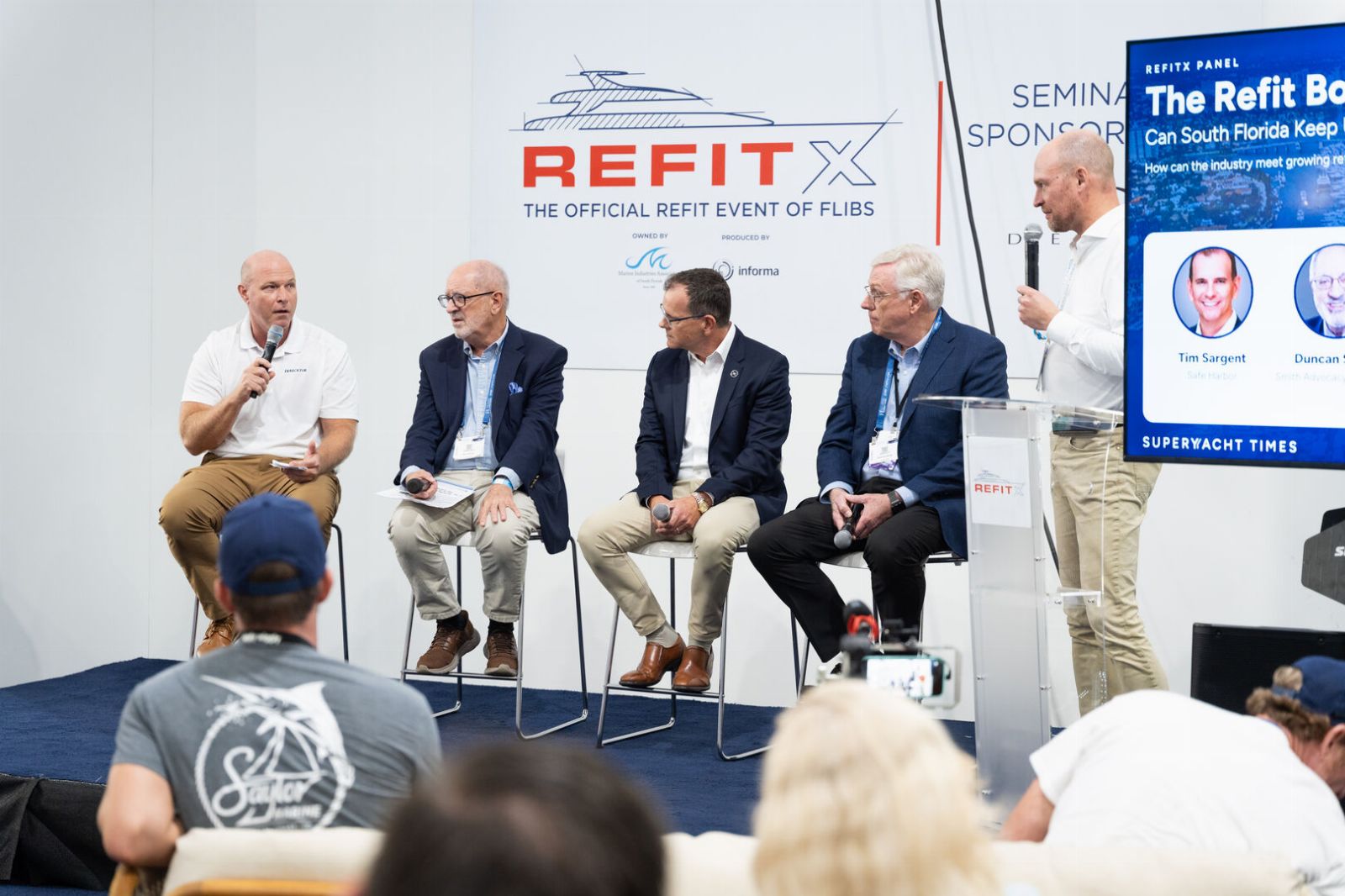
Tim Sargent, chief operating officer of Safe Harbor, explained how his group is responding. The marina and yard operator, acquired by Blackstone for 5.65 billion dollars in 2025, is putting serious money into training and moving experienced service staff into its training team so they can pass on their know-how.
For Sargent the first step is showing young people that these careers exist and can grow. Those with the right attitude can then learn the trades inside the company.
The European factor
Earlier in 2026 Derecktor had already noted that many large American yachts now cross the Atlantic for major yard periods as a matter of course. Sargent added that US yards also depend on European equipment makers sending their technicians over: owners need to know their yacht can be serviced anywhere, and any obstacle to that slows the whole industry.
Grants and waterfronts
Washington-based advocate Duncan Smith praised the small shipyard grant run by the US Maritime Administration (MARAD), which has given out 310 million dollars in 16 years. He asked MARAD to rethink who qualifies: today the scheme favours yards working on workboats or mixed fleets, and on vessels of at least 100 feet (30.48 metres), which leaves out many dedicated yacht refit sites. As refit work grows more complex, he argued, more of these yards should be eligible.
Smith also called the loss of working waterfronts critical. In 2025 the US had 32 active refit yards, about half of them in Florida around Palm Beach and Fort Lauderdale, and waterfront land is often worth more to developers of apartment blocks. He sees some hope in the government’s push for maritime prosperity zones, if they help protect refit capacity.

 Giorgia Capone